


THIS IS A STOP ON THE SALADO HISTORIC LANDMARKS TOUR – PLEASE RESPECT THE PROPERTY OF ANY PRIVATE BUSINESS OR RESIDENTS AT THIS LANDMARK.
Hamblen (marker) House
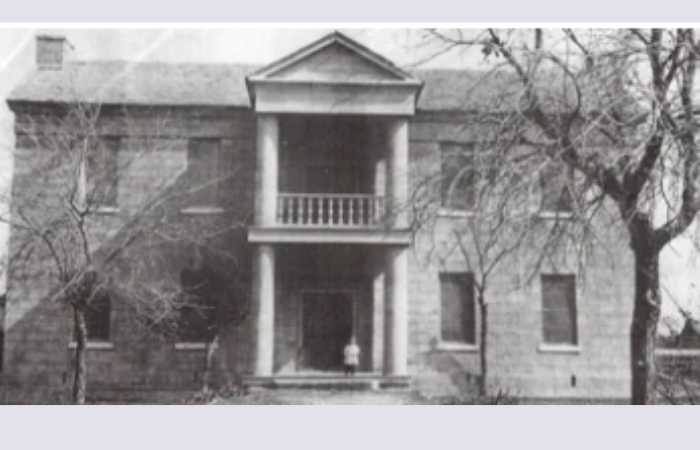
The site of the Hamblen homestead is now the site of the administrative offices of Salado Independent School District and Civic Center. A house was built on this site by William & Alice Hamblen in 1868. William was a trustee of Salado College for 20 years. After William died, Alice Hamblen donated the family homestead and 4.6 acres for the site of a new public school in 1924. The home was torn down for the school building that now stands in its place. It was used as a school until 1969. The Hamblen family cemetery is located behind the school. ( RTHL )

THIS IS A STOP ON THE SALADO HISTORIC LANDMARKS TOUR – PLEASE RESPECT THE PROPERTY OF ANY PRIVATE BUSINESS OR RESIDENTS AT THIS LANDMARK.
Old Red School
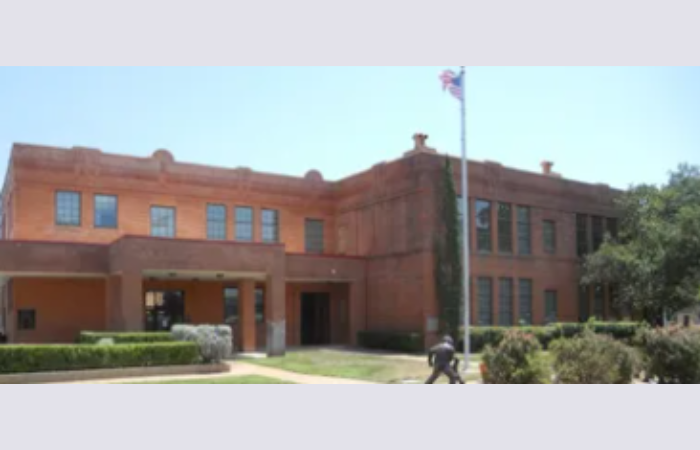
In 1919, the stockholders of the old college property voted unanimously to donate the grounds and buildings for use by Salado Public Schools. The aging facility served the public school system until 1924, when a third fire destroyed the building, as discussed earlier. The community was in desperate need of a modern schoolhouse. Alice Joy Hamblen, the widow of William K. Hamblen, came to the rescue with a generous donation. The donation included the old Hamblen family home, demolished to make room for the new brick facility that was constructed in 1924. After many years of use as a school, in 1979 it ceased to be used as a public school. The community restored the building and used it as Salado’s Civic Center. The building houses the offices of the school district. The building is located at Main Street and Van Bibber Lane. (SHSL)

THIS IS A STOP ON THE SALADO HISTORIC LANDMARKS TOUR – PLEASE RESPECT THE PROPERTY OF ANY PRIVATE BUSINESS OR RESIDENTS AT THIS LANDMARK.
Denman Log Cabin
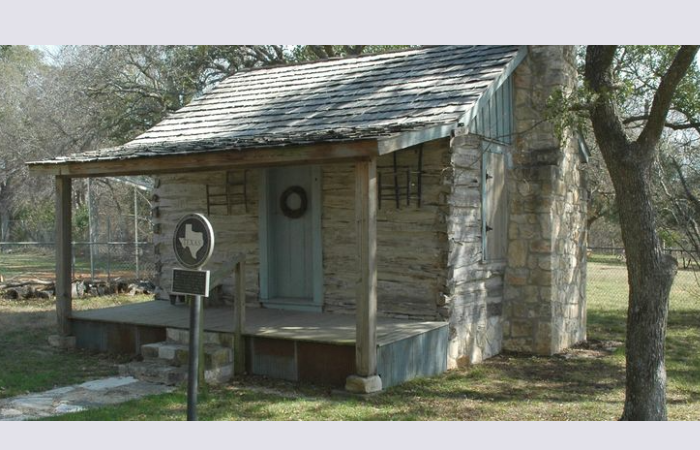
The cabin was built by Moses H. Denman in 1867 in Sparta, 15 miles NW of Salado. It was restored in 1955, in Belton, moved to Troy, and then to Salado. The cabin is constructed of hand-hewn square cedar logs joined by wooden pegs, with a fireplace of native stone. It is furnished as it would appear in frontier times but not original to the cabin. The Robert Denman family donated the cabin to the Salado Historical Society. (RTHL)


THIS IS A STOP ON THE SALADO HISTORIC LANDMARKS TOUR – PLEASE RESPECT THE PROPERTY OF ANY PRIVATE BUSINESS OR RESIDENTS AT THIS LANDMARK.
Boles- Aikin Cabin
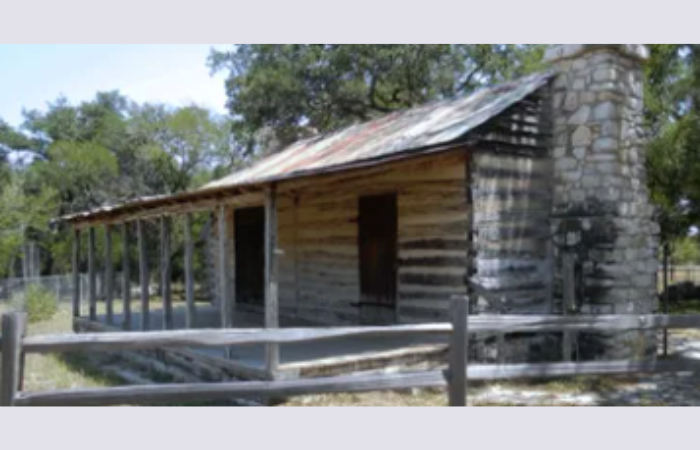
The Boles-Aiken Log Cabin is two rooms built in the 1850s. It was discovered inside an old home in Salado in March 1986 when it was being torn down. It was dismantled and stored for 4 years until 1990, when the Salado Historical Society re-constructed it on the present site and restored it to its present condition. Much of the original materials of the cabin were saved and used in the reconstructed cabin, the flooring, chimney and fireplace, logs, and rock foundation. An archeological excavation revealed artifacts from the 1840s into the late 1950s. Records show tax was paid on the cabin in 1851 when it was on a stagecoach route that carried mail from Austin to Waco. The house built around the two-room log cabin was occupied until 1984. The cabin is named for its first two owners Benjamin Boles and Hermon Aiken. (SHSL)

THIS IS A STOP ON THE SALADO HISTORIC LANDMARKS TOUR – PLEASE RESPECT THE PROPERTY OF ANY PRIVATE BUSINESS OR RESIDENTS AT THIS LANDMARK.
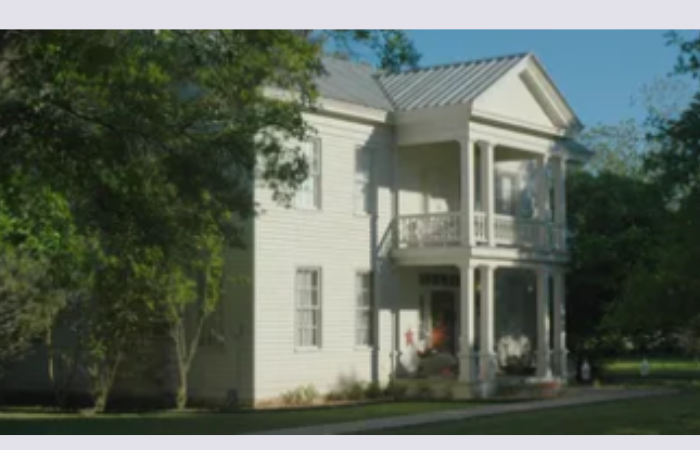
Halley House
The Captain Halley House was built ca. 1860, for his wife and eight children. The wood-frame construction exhibits Greek Revival symmetry and proportions. As of this writing it is undergoing restoration. It is built of wood-frame construction with clapboard siding and has an ell-shaped plan. It exhibits Greek Revival symmetry and proportions in its five-bay fronts which feature double-hung windows with six-over-six lights, and pedimented two-story porticoes supported by square columns. Also typical is the use of simple cornice molding, as well as the presence of a central entrance marked with double doors, transom, and sidelights. (RTHL, NRHP)

THIS IS A STOP ON THE SALADO HISTORIC LANDMARKS TOUR – PLEASE RESPECT THE PROPERTY OF ANY PRIVATE BUSINESS OR RESIDENTS AT THIS LANDMARK.
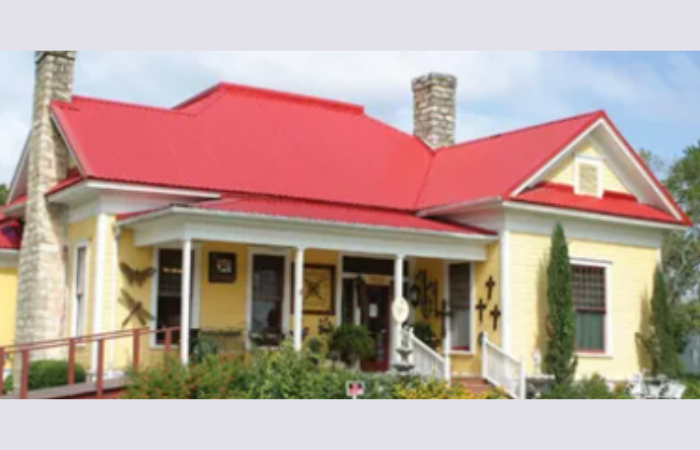
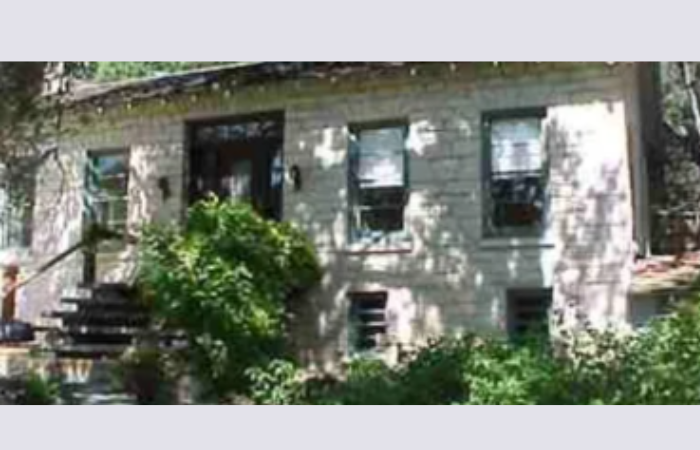
Vickrey-Berry House
The W.R. Berry home was built in 1870 by J.W. Vickrey out of cut rock blocks, the walls being 20 inches thick, and two stories high. At the turn of the century the rock was on three quarters of the house, but not the foundation, as some were removed and used on some of Mr. Berry’s buildings, the most notable being the Salado Bank, which was built exclusively with rock from the W.R. Berry residence. The remaining rock walls were extended to the one story cypress house now in use. The house is a currently a boutique store. (SHSL)

THIS IS A STOP ON THE SALADO HISTORIC LANDMARKS TOUR – PLEASE RESPECT THE PROPERTY OF ANY PRIVATE BUSINESS OR RESIDENTS AT THIS LANDMARK.
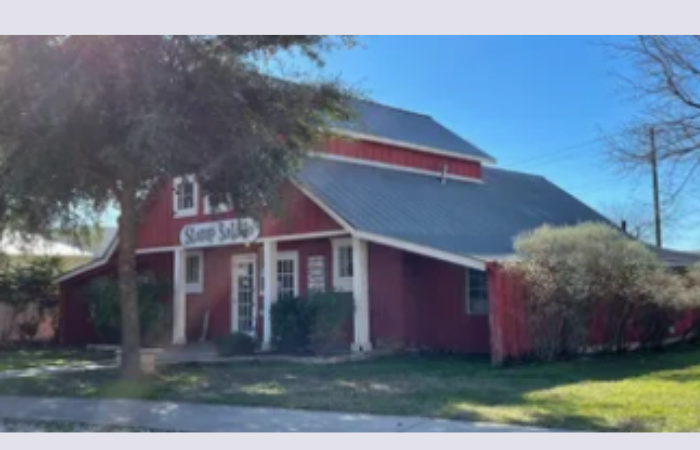
Vickrey Berry House Barn
Vickrey-Berry Carriage Barn and house were built about 1870 by John W. Vickrey. Eighteen years later William M. Berry purchased the two story rock house and barn. Between the house and barn were a windmill and raised water tank. In later years, the barn was referred to as a carriage house for good reason, as it was upscale compared to the average outbuilding of its day and had large double doors to accommodate Mr. Berry’s hearse. The carriage house was not used as a funeral home as rumor had it, however Mr. Berry sold caskets from the second story of in his mercantile store across Salado Creek. (SHSL)

THIS IS A STOP ON THE SALADO HISTORIC LANDMARKS TOUR – PLEASE RESPECT THE PROPERTY OF ANY PRIVATE BUSINESS OR RESIDENTS AT THIS LANDMARK.
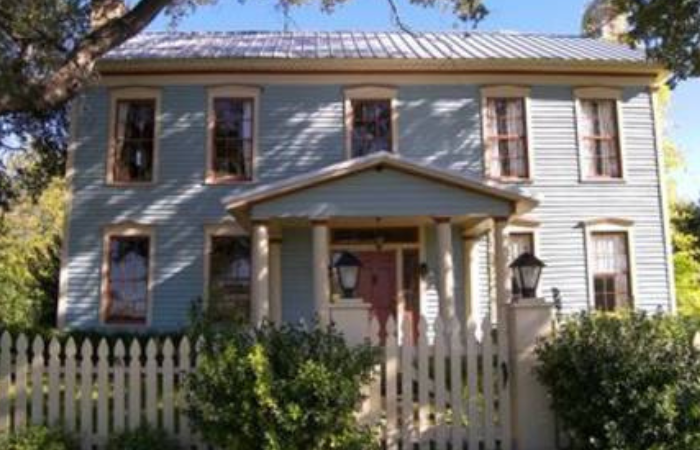
Fowler House
The Fowler House is located on the northern fringes of Salado. Josiah Fowler built it in 1872. It is in the Greek Revival style with its symmetry and proportions in the two-story front. The existing single-story portico with pediment suggest that it is not original, but had an earlier portico where the present one is located. Mr. Fowler was an educator who coauthored a widely used textbook titled “Fowler’s Arithmetic.” (RTHL, NRHP)

THIS IS A STOP ON THE SALADO HISTORIC LANDMARKS TOUR – PLEASE RESPECT THE PROPERTY OF ANY PRIVATE BUSINESS OR RESIDENTS AT THIS LANDMARK.
White-Aiken House
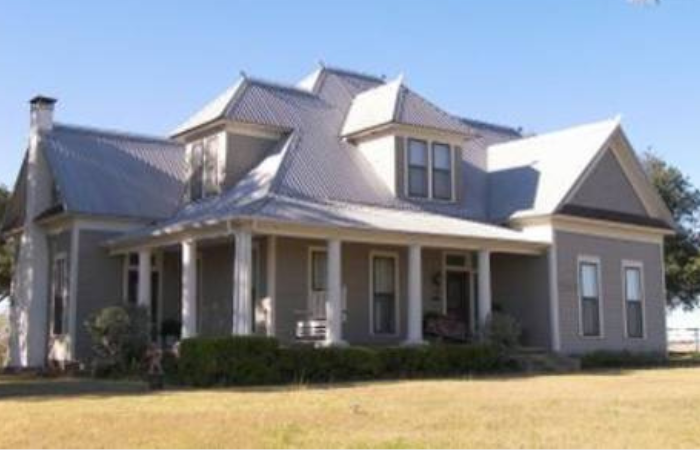
Built in the early 1900s and moved to its current location about 1920, this house is a good example of a Texas farmhouse. Two Hamblen daughters lived in the house with their husbands. Emma Hamblen married Gus White, who built the house. Anna Hamblen and her husband Carl Aiken, as well as Anna’s mother, the widowed Alice Hamblen, also lived there for many years. (NRHP)

THIS IS A STOP ON THE SALADO HISTORIC LANDMARKS TOUR – PLEASE RESPECT THE PROPERTY OF ANY PRIVATE BUSINESS OR RESIDENTS AT THIS LANDMARK.
West Salado Cemetery
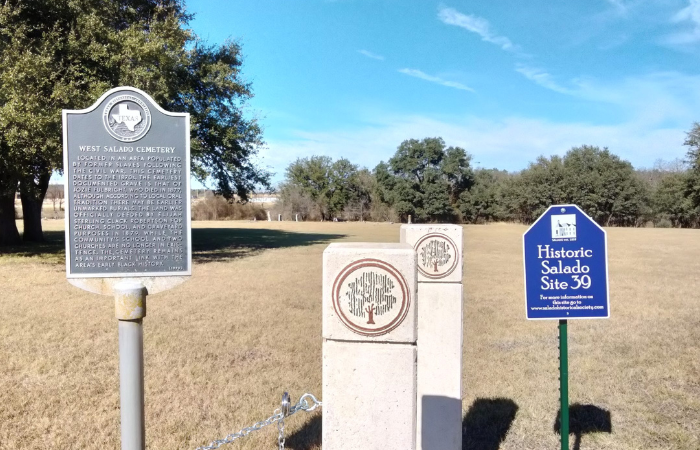
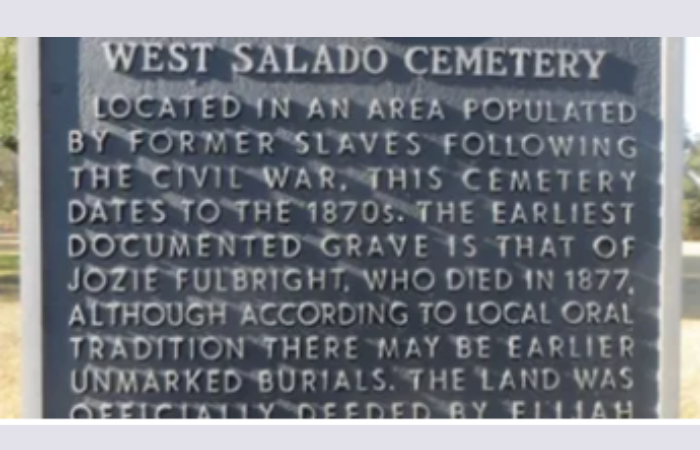
The cemetery is located in an area populated by the African-American residents of Salado following the Civil War. The earliest documented grave is Josie Fulbright, who died in 1877, although according to local oral history there may be earlier unmarked burials. E.S.C. Robertson’s widow deeded the land for church, school, and graveyard purposes. While the community’s school and two churches are no longer in existence, the cemetery remains an important link with the area’s early black history. West Salado Cemetery was designated a Texas State Historic Cemetery in 1990. (RTHL)

THIS IS A STOP ON THE SALADO HISTORIC LANDMARKS TOUR – PLEASE RESPECT THE PROPERTY OF ANY PRIVATE BUSINESS OR RESIDENTS AT THIS LANDMARK.
Robertson Plantation
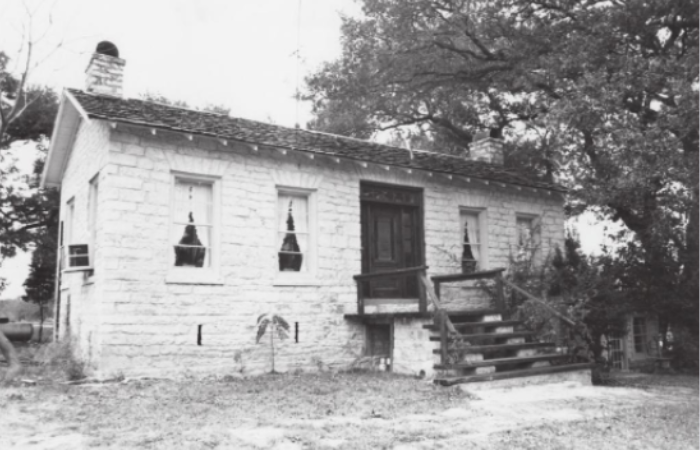
The grounds and home of Col. Elijah Sterling Clack Robertson is one of the best examples of the Greek Revival architecture style as interpreted in Texas. The house has 22 rooms and includes a “strangers’ room” in one of the end pavilions, which allowed travelers to lodge at home without bothering the family. The house and buildings have remained intact through seven generations of the Robertson family. It is one of the best-preserved complexes from the era, and includes in the servants quarters, a stone/wood barn, and the family cemetery where Col. Robertson is buried. (RTHL & NRHP)
THIS IS A STOP ON THE SALADO HISTORIC LANDMARKS TOUR – PLEASE RESPECT THE PROPERTY OF ANY PRIVATE BUSINESS OR RESIDENTS AT THIS LANDMARK.
the hutchen house
E.M. Hutchens married Ruby Vickrey December 31, 1917. Prior to their marriage, Hutchens had attended Salado College from 1913 – 1917. At the time “Miss Ruby was head of the piano department. Hutchens had even signed up as a piano student. Later, he entered the journalism department of the University of Texas at Austin, and it was from there he volunteered for the Army in 1917. Hutchens was on his way home, suffering from shell-shock, when daughter Helen was born in 1918, at the home of her grandparent’s G.N. and Sophia Vickrey. Son, Richard Vickrey Hutchen was born in 1924. After living at various places in Texas, the couple decided to come to Salado and build a house. They bought the site where the present house is located plus several acres to the north and east. The house was built in 1921 by Hutchens, and Paul Pirtle and his father, E.G. Pirtle. Hutchens lived there until his death in 1979. Materials for the house were brought from the V.R. Means Lumber Company in Belton. Several outbuildings surrounded the house one of which was known as Hutchens’ Ritin Shack. It was in this small cabin that
Hutchens wrote his well-known history book, Tales of Old Salado. The Hutchens’ home was filled with literature and music. Hutchens had a rare library including one hundred volumes of English and American classics, and Greek and Roman history and mythology. For over 35 years the home was filled with the music of Miss Ruby’s piano students, each with 30-40 lessons a year, as well as the childrens choirs that sometimes gathered here. Victor Means Jr. purchased the home in 1991 from Hutchens family. Vic Means himself remodeled the house. The house has two owners since that time, Pete Simcut and Dennis Dewine, the present owners.
THIS IS A STOP ON THE SALADO HISTORIC LANDMARKS TOUR – PLEASE RESPECT THE PROPERTY OF ANY PRIVATE BUSINESS OR RESIDENTS AT THIS LANDMARK.
J.H. Norwood Home
Oldest records indicate the land on which the Norwood house sits was once part of a Spanish Land Grant and was initially owned by Clara D. and C.B. Baird and was later conveyed to J. W. Walkup. On March 28, 1909, Walkup sold the land to Mrs. M.J. Wheaton who built her home, consisting of a large kitchen and a bedroom, on the property. Josiah and Pearl Norwood purchased the home on December 1, 1910. The Norwood family lived in the home continually from 1910 until their passing in 1966. Beginning with only two rooms built on pier (cedar stumps and rocks) and beam foundation, Pearl Norwood had a reputation for moving and adding walls as children arrived through the years. A living room, dining room, and an indoor bathroom were added, porches were enclosed, and a south side fireplace was taken out and replaced with windows. The “box” house now has eight rooms. Josiah H. Norwood built the Norwood Grocery and General Merchandise store in Salado in the early 1920s. He operated the store until the mid-depression years, and then began working for Cochran, Blair, and Potts in Belton until 1955. The General Merchandise store at 409 South Main
Street is still much the way it was originally, and currently houses retail shops just across from the Stagecoach Inn. J. H. Norwood was active in the Salado Masonic Lodge and Woodmen of the World, and the couple were life-long members in the United Methodist Church of Salado. Although no one currently lives in the home, a daughter and her family maintain the property for the Memorial Day Family Reunion and a Christmas Open House in December. Landmark Award – December 9, 2006 Source: Margaret Brown Blanton and Jeannie Brown Evans, daughters of Mildred Norwood Brown.
Historical Sites #1 – #15 | Historical Sites #16 – #30