


THIS IS A STOP ON THE SALADO HISTORIC LANDMARKS TOUR – PLEASE RESPECT THE PROPERTY OF ANY PRIVATE BUSINESS OR RESIDENTS AT THIS LANDMARK.
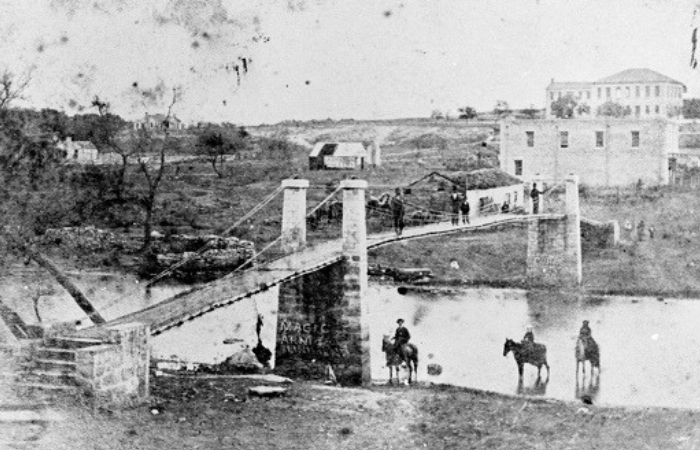
Salado Main Street Bridges
Crossing the Salado Creek has always been a challenge for early day residents of Salado and a daily challenge for students attending Salado College. Crossing was done be stepping across the creek on strategically places rocks. Then came logs chained to those rocks to keep the feet dry when crossing, however, heavy rains washed the logs away. In 1868 enough money was raised for a wire cable suspension foot-bridge which served the people for thirty years. Then in 1892 the county built an iron wagon-foot bridge. After a flood destroyed it, a duplicate bridge was built which was also destroyed. Finally, in 1922 the current concrete bridge was completed with reinforced steel set into the rock bed. Creek flooding has been over the bridge many times since then. ( RTHL )

THIS IS A STOP ON THE SALADO HISTORIC LANDMARKS TOUR – PLEASE RESPECT THE PROPERTY OF ANY PRIVATE BUSINESS OR RESIDENTS AT THIS LANDMARK.
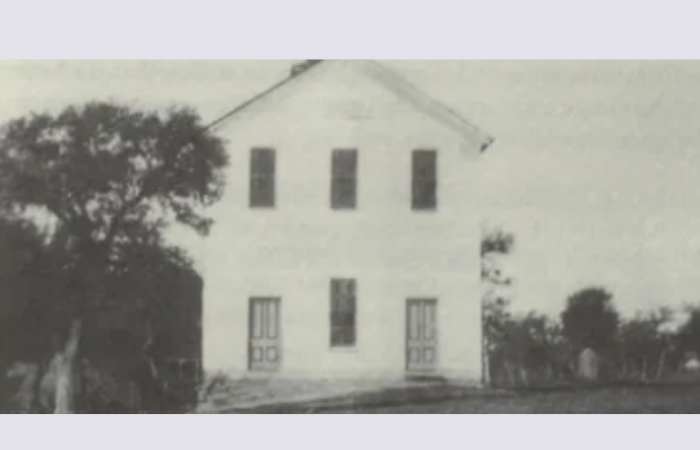
First Baptist Church
The First Baptist Church congregation was formed in Salado in 1864. In 1878, the First Baptist Church built a two-story wooden structure that was shared by the local Masonic Lodge 296, AF&AM. The land was donated by O. T. Tyler who lived next door. In the original building, the Baptists met on the first floor and the Masons met on the second floor. The second floor was literally sawed off and moved to Church Street where the Masonic Lodge 296 now meets. The lower half was torn down. Two other markers are at the church: Louisa Adeline (Addie) Barton, a missionary to Mexico; Kate and Zachary Taylor, missionaries to Brazil. (RTHL)

THIS IS A STOP ON THE SALADO HISTORIC LANDMARKS TOUR – PLEASE RESPECT THE PROPERTY OF ANY PRIVATE BUSINESS OR RESIDENTS AT THIS LANDMARK.
Davis Mills — Marker
The mill that created the most attention in Salado was the Davis Mill, constructed in 1864 by William A. Davis, it was the first stone mill with carding machine in this vicinity. A sawmill and gin were added in 1866. With its French burrs, Leffel water wheel, and silk bolt from Galveston, the mill produced flour for local homes. Widows did not pay a milling fee.
Davis’ deed allowed him to build a dam that would not create an overflow of springs along the creek. So he built a dam that caused the springs to overflow the creek and prevented free use of the springs for drinking water. After many complaints about the height of the dam being 8 to 10 inches over creek level, Mr. Davis refused to lower the dam. He was sued in Bell County Court. After a verdict favoring Mr. Davis was overturned upon appeal to the Texas Supreme Court, another trial ruled in favor of the citizens request to lower the dam.

THIS IS A STOP ON THE SALADO HISTORIC LANDMARKS TOUR – PLEASE RESPECT THE PROPERTY OF ANY PRIVATE BUSINESS OR RESIDENTS AT THIS LANDMARK.
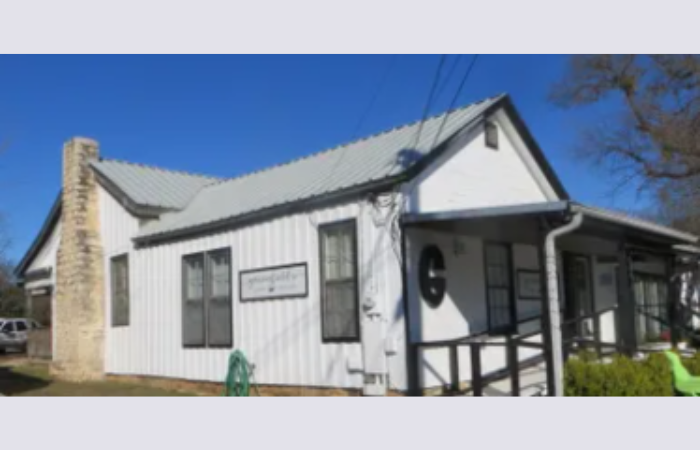
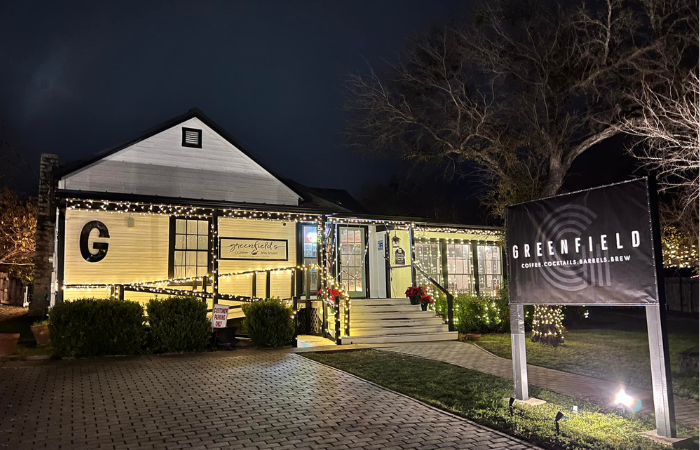
Davis House
The Davis House, built ca. 1874 on Main Street, has developed from an original , double-pen log structure into the almost random plan of today. It even incorporated a small frame store that was moved up the hill from the creek and attached in 1900. Another addition was completed in 1920. One of the mantels has a carved star placed on it that is original to the house. Today it is a coffee shop. (NRHP))

THIS IS A STOP ON THE SALADO HISTORIC LANDMARKS TOUR – PLEASE RESPECT THE PROPERTY OF ANY PRIVATE BUSINESS OR RESIDENTS AT THIS LANDMARK.
Anderson House
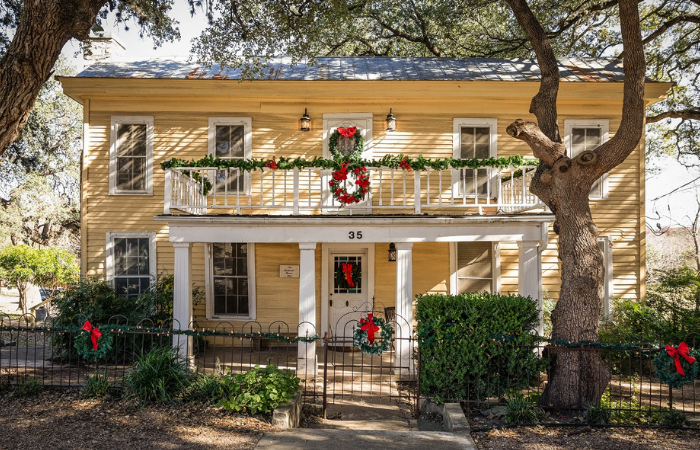
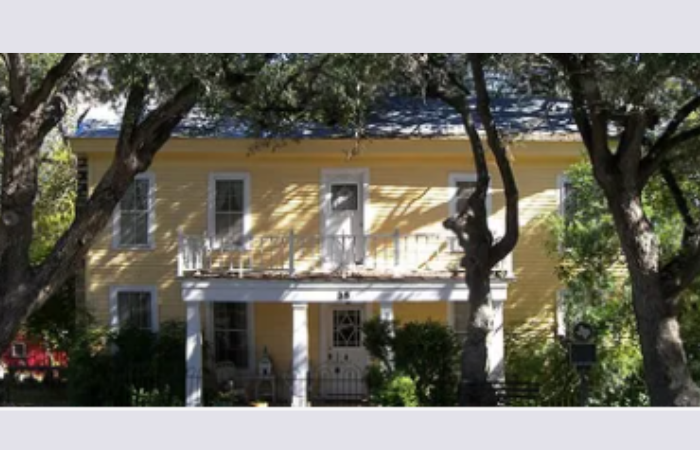
The Anderson House, built in 1860 on eight acres, four of which still remain with the house. The home is in the Greek Revival style even though some of the design details and proportions are not typically those of the Greek Revival style as seen in Texas. James Anderson built the house for his wife Elizabeth and fourteen children. The first sale of the house was in 1864 for the sum of $2,000 Confederate notes. Adjacent to the house is a native limestone building also built in 1860. It has had many uses in the past including only saloon. ( RTHL , NRHP )

THIS IS A STOP ON THE SALADO HISTORIC LANDMARKS TOUR – PLEASE RESPECT THE PROPERTY OF ANY PRIVATE BUSINESS OR RESIDENTS AT THIS LANDMARK.
Salado Saloon
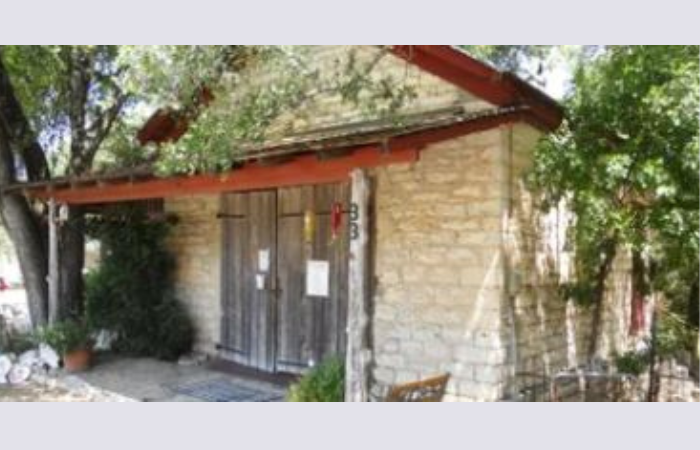
In 1860, the historic Rock Building was built as part of the James B. Anderson home next door. It was built of hand cut limestone. The fireplace, ceiling rafters and front doors are original. The side room was added in 1985 of old lumber. It was first used by Anderson as his office when he was Justice of the Peace.
Over the years the building has been used as a variety of stores, law office, bootmaker, stagecoach stop, livery stable, and only saloon ever in Salado. In 1882, the building was leased for a saloon. When the ladies of the community found out they felt the moral, cultural, and religious foundations of Salado would be eroded. The men did not see a saloon that way and did nothing. The ladies developed a strategy and two at a time sat in front of the saloon when it opened knitting all day. The result was no one entered the saloon. The owner was so angry he packed up and moved to Holland where he opened the “Salado Saloon” out of spite for what the ladies of Salado did to him. (RTHL with house next door)

THIS IS A STOP ON THE SALADO HISTORIC LANDMARKS TOUR – PLEASE RESPECT THE PROPERTY OF ANY PRIVATE BUSINESS OR RESIDENTS AT THIS LANDMARK.
Tyler House
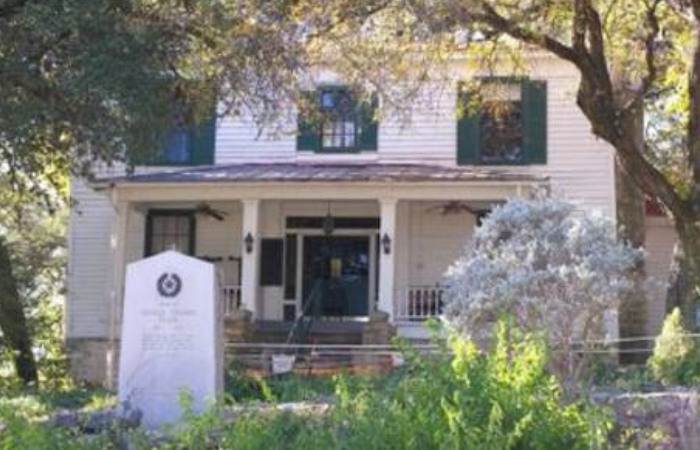
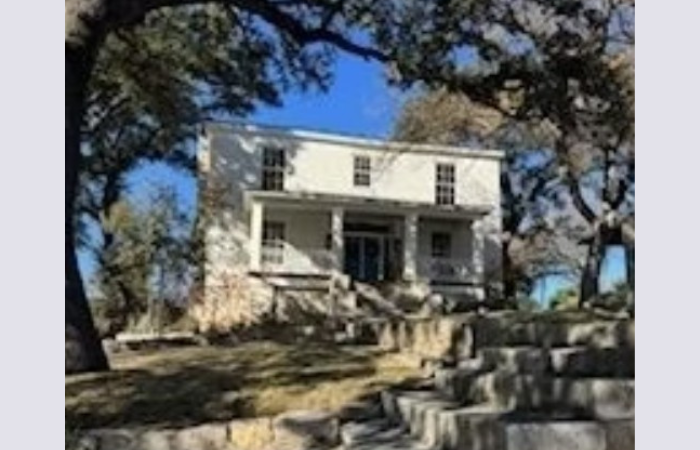
The Tyler House, built in 1857, is located on Main Street across from the historic Anderson House, just north of the creek. Both of these historic structures witness the Greek Revival style in their overall forms and facades, but depart from that style in certain details. Most notably, their porticoes are horizontal in emphasis, and both their design and proportions are not typically those of the Greek Revival style as seen in Texas. It is even possible that the existing porticoes are not original.
The originally detached kitchen of the Tyler House was later joined to the main structure around 1935, and in 1971 a one-story room was added to the north side of the house to expand business space. Compatible materials were used in the addition, although it was designed so that it could be removed. (RTHL & NRHP)

THIS IS A STOP ON THE SALADO HISTORIC LANDMARKS TOUR – PLEASE RESPECT THE PROPERTY OF ANY PRIVATE BUSINESS OR RESIDENTS AT THIS LANDMARK.
Masonic Lodge
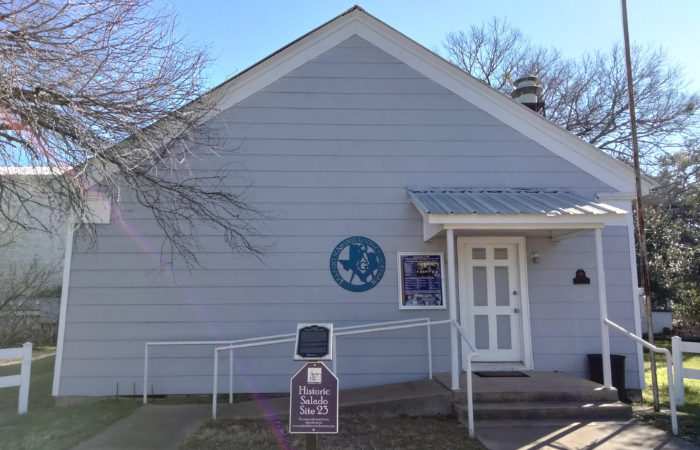
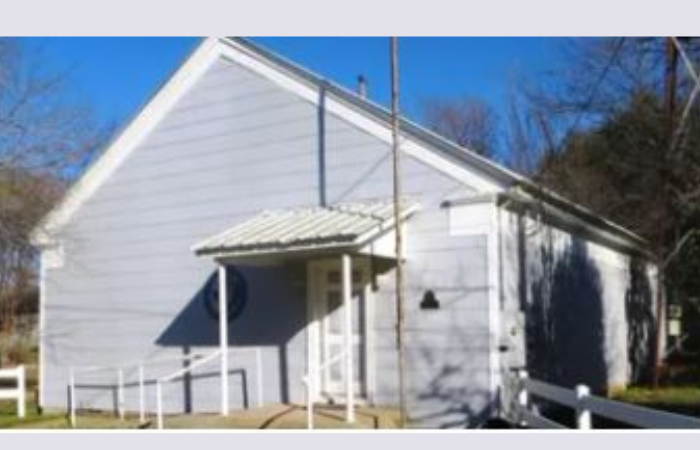
Built in 1878, this building is the top half of the original First Baptist Church. The church met on the first floor and the lodge met on the second floor. It was sawed off and moved to Church Street where it is Masonic Lodge 296 AF&AM. The lodge was formed June 13, 1867, and has been active ever since. (NRHP, SHSL)

THIS IS A STOP ON THE SALADO HISTORIC LANDMARKS TOUR – PLEASE RESPECT THE PROPERTY OF ANY PRIVATE BUSINESS OR RESIDENTS AT THIS LANDMARK.
Armstrong-Adams House
This graveyard, a 2.5-acre site given by E. S. C. Robertson, is the final resting place for many prominent Salado residents. Many of the gravesites have Texas Historical Commission Markers. The earliest marked burial site is 1856. Oral tradition indicates there were others buried there prior to then, but those earlier burials are not marked or documented. Stones throughout this section of the graveyard mark old burial sites since carved markers were not readily available. Marble was used as a common marker in later years since it was easy to carve and was imported from other states. (RTHL)

THIS IS A STOP ON THE SALADO HISTORIC LANDMARKS TOUR – PLEASE RESPECT THE PROPERTY OF ANY PRIVATE BUSINESS OR RESIDENTS AT THIS LANDMARK.
Norton-Orgain House
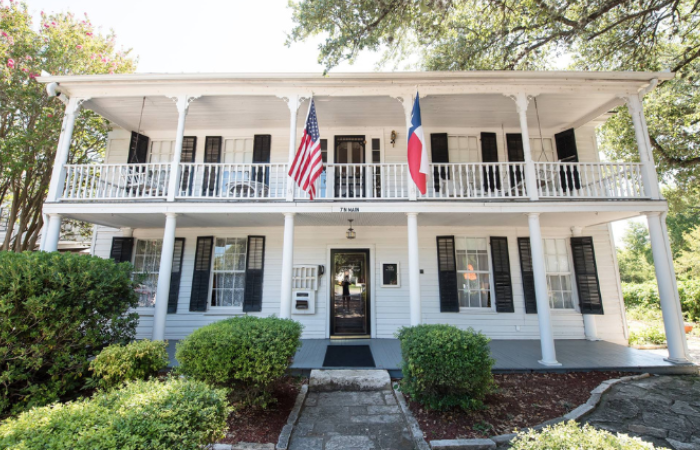
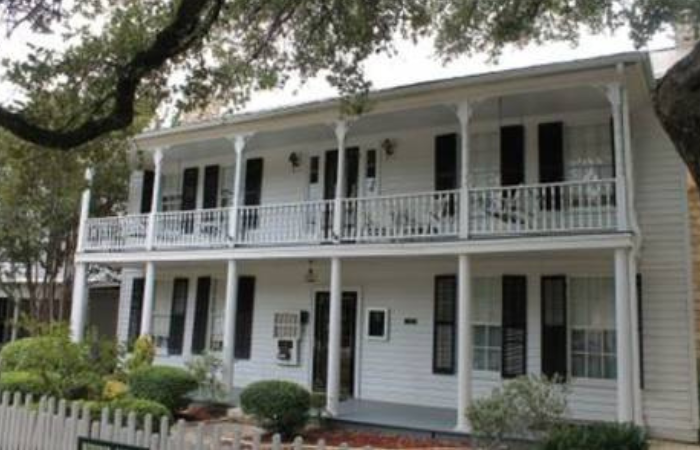
Built in 1872, by Edward R.A. Buckles, he resided in the house one year before selling it in 1873 to Col. Nimrod Norton and wife Mary. Col. Nimrod and partners donated pink granite for the exterior of the state capitol. He in turn, sold the house in 1882 to John and Kate Alma Orgain who were both prominent educators at Salado College and Thomas Arnold H.S. The house is now a B&B. (RTHL, SHSL)
Today, this historic home operates as The Salado Inn, a bed & breakfast and an event/wedding venue. Step back in time and experience the history of Salado in a suite at The Salado Inn.
To make a reservation or learn more about their event & wedding venue, visit them online at www.thesaladoinn.com.

THIS IS A STOP ON THE SALADO HISTORIC LANDMARKS TOUR – PLEASE RESPECT THE PROPERTY OF ANY PRIVATE BUSINESS OR RESIDENTS AT THIS LANDMARK.
Levi-Tenney House
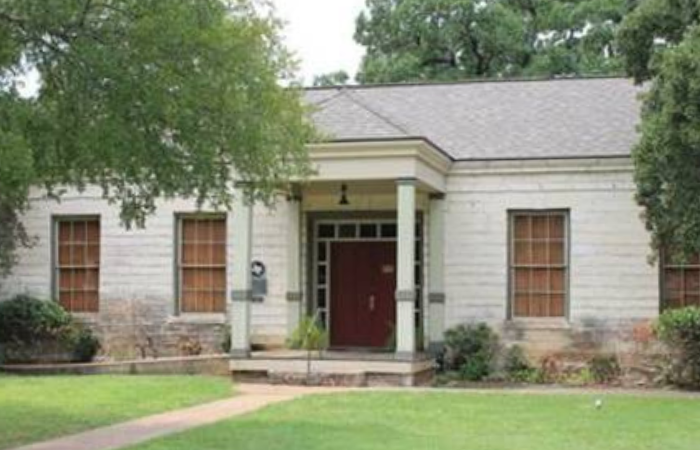
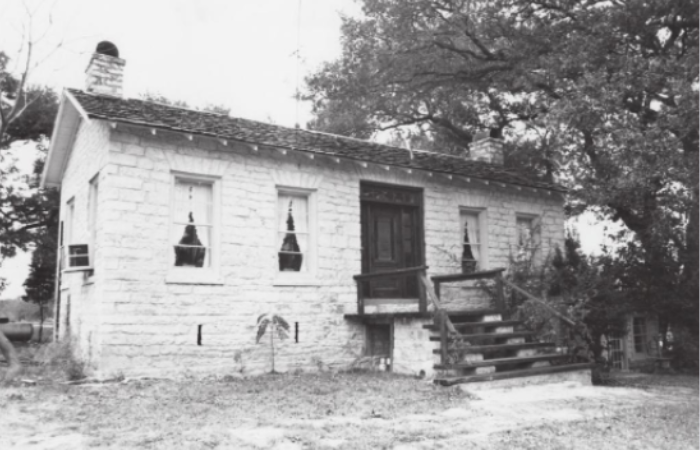
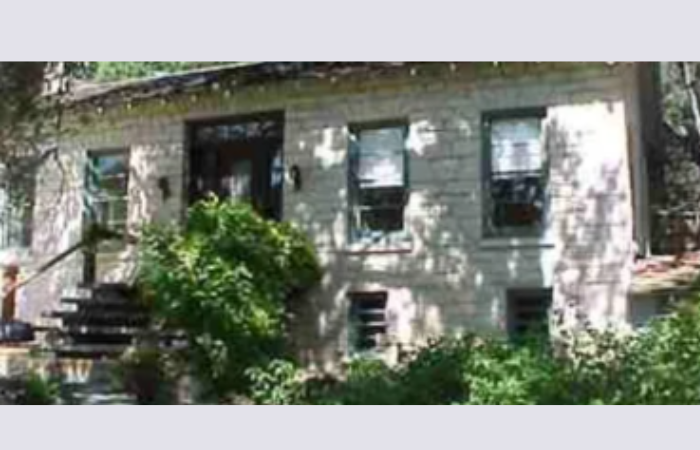
This home was built in 1860 by a Presbyterian pastor and first president of Salado College, Levi Tenney. Tenny and his family lived in the house for about a year before he was released from his position at the college. The home is one story and is quite modest in size. Nevertheless, it is a fine example of the Greek Revival style of symmetry and proportions. An addition has been added to the back of the structure. Constructed of dressed limestone blocks, it has five-bay front features and displays the use of quoins and flat arches above double-hung windows. The windows have six-over-six lights, projecting portico with cornice, and a flat roof supported by square columns. (NRHP)

THIS IS A STOP ON THE SALADO HISTORIC LANDMARKS TOUR – PLEASE RESPECT THE PROPERTY OF ANY PRIVATE BUSINESS OR RESIDENTS AT THIS LANDMARK.
The Barton House
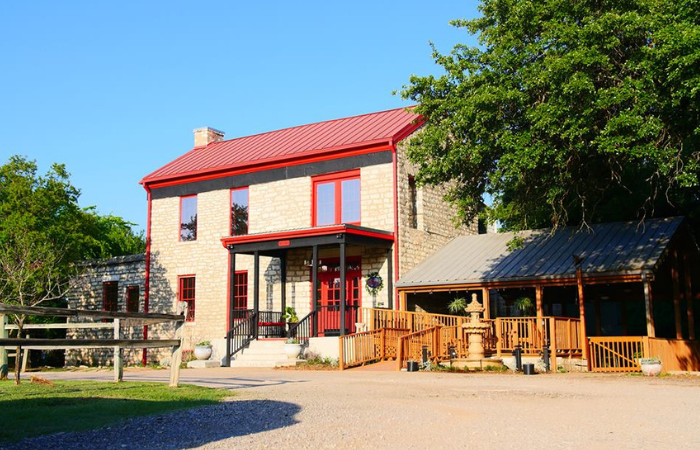
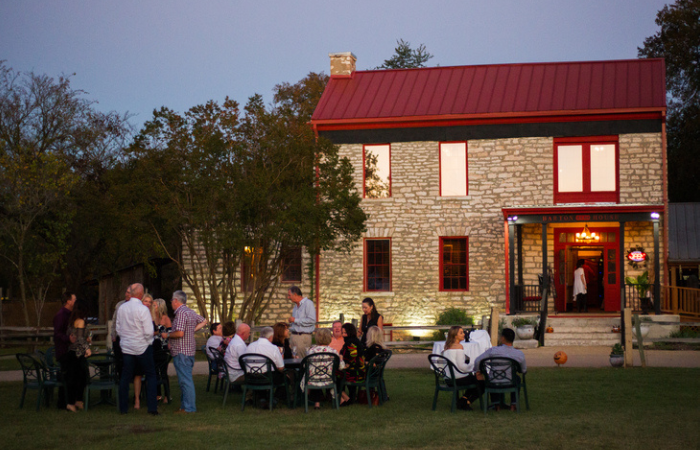
Built in 1866 by Dr. Welborn Barton this two-story native stone house for his wife Louisa and ten children. He and his wife ran a busy medical practice from the house. It was on 22 acres of land purchased from E.S.C.Robertson for $50. After Barton’s death in 1883, Louisa provided room and board for students to supplement her income. She died in 1920. The house consists of two full floors and a cellar, constructed into a hillside. It is now a fine restaurant. (RTHL, NRHP)
Today, The Barton House is an intimate Southern Steakhouse & Eatery in the heart of the village. The Barton House cuisine serves contemporary inspired and rooted American flavors while celebrating local & seasonal ingredients from the surrounding region. The restaurant philosophy reflects an emphasis on each culinary creation out of seasonal produce. Born from an understanding of using simple flavors in bold combinations, every dish delivers the bright, fresh notes of home. The Barton House can
be experienced in many ways, whether it’s a leisurely weekend brunch with friends, a thrilling dinner in the dining room, or a late-night libation at the Speakeasy, the restaurant offers guests something new and unique to try.
Our philosophy is to bring excellence and quality curated sourced ingredients to the table”. The Barton House celebrates an innovative yet natural marriage of cultures and cuisines. Located in a limestone-clad historical house Barton House serves an approachable menu inspired by Southern flavors and designed for flexibility. The timeless space is brought together by the open kitchen, a focal point that beckons both neighbors and guests from afar to the warmth of the dining room.
To learn more about the restaurant, their menu, catering, or speakeasy, visit them online at www.thebartonhousesalado.com.

THIS IS A STOP ON THE SALADO HISTORIC LANDMARKS TOUR – PLEASE RESPECT THE PROPERTY OF ANY PRIVATE BUSINESS OR RESIDENTS AT THIS LANDMARK.
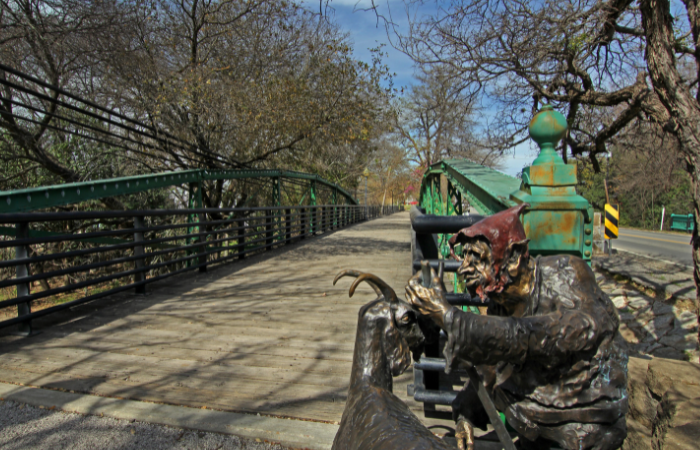
Dodd's Creek Truss Bridge
One, two, three goats and a bridge
With a troll whose gullible, just a smidge
So the classic story goes
And how it ends every literate child knows!
Stand-off here or camaraderie?
Well, you’ll just have to come down and see!
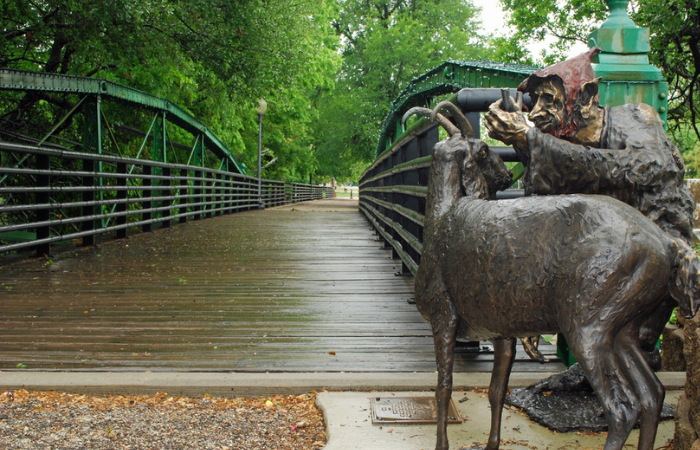
On the South approach of Salado’s historic Dodd’s Creek Pedestrian Bridge (which has much to commend it in its own right) you will find this ‘life size,’ cast bronze sculpture grouping by local artist Troy Kelley. Kelley’s most famous local work is that of Sirena, down in the spring, but this detailed ‘stand off’ is well worth a visit all its own.
Finished in 2000 and placed in 2001. You decide who’s the GRUFF here: Billy or the Troll!
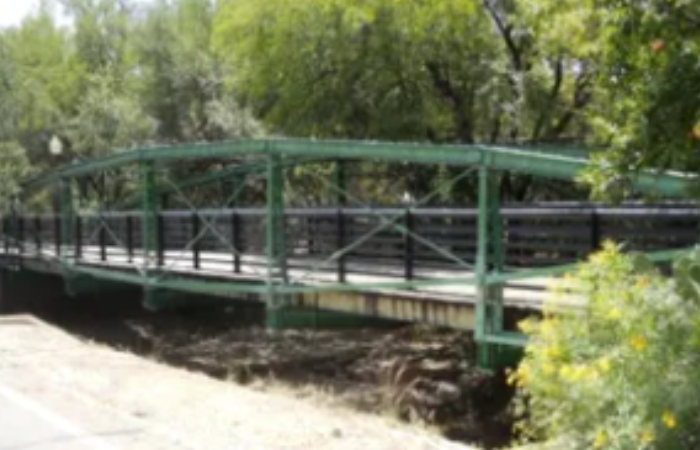
Dodd’s Creek Lenticular Truss Bridge is one of many patented truss designs developed in the mid- to late-19th century, this 87-foot lenticular truss bridge features a curved top and bottom chord which forms a lens shape. This bridge originally was located across
Cowhouse Creek and later was moved to Dodd’s Creek. In 1990, the Texas Historical Commission and the Texas Department of Transportation recognized the bridge as a historically significant engineering structure. The Dodd’s Creek bridge was moved to this site (Campbell Branch) in 1997 to improve the flow of traffic, protect pedestrians and enhance the Salado Historic District. (RTHL)
One of many patented truss designs developed by American inventors and engineers in the mid- to late-19th century, this 87-foot lenticular truss bridge represents an unusual truss type in the United States. The lenticular design features a curved top and bottom chord which forms a lens shape. The patent, issued to William O. Douglas of Connecticut in 1878, was the only one given for a lenticular truss bridge in the United States. Most were constructed in the New England area and in New York state. Through the efforts of William Payson, a salesman for Douglas’ Berlin Iron Bridge Company, Texas acquired at least a dozen truss bridges in the late 19th century. The Coryell County Commissioners Court contracted with the Berlin Iron Bridge Company to build four lenticular truss bridges for $16,500 in 1889. This bridge originally was located across Cowhouse Creek and later was moved to Dodd’s Creek. In 1990 the Texas Historical Commission and the Texas Department of Transportation identified eight lenticular truss bridges surviving in Texas. Four of the spans were located in San Antonio; the other four were positioned on out-of-service roadways. The only examples of this rare bridge type west of the Mississippi, they are recognized as historically significant engineering structures. The Society for Industrial Archeology and Historic American Engineering Record, a branch of the National Park Service, also have recognized the importance of the Texas lenticular bridges as products of a short-lived but important period of bridge technology in 19th century engineering history. The Dodd’s Creek bridge was moved to this site in 1997 to improve the flow of traffic, protect pedestrians and enhance the Salado Historic District. (2000)

THIS IS A STOP ON THE SALADO HISTORIC LANDMARKS TOUR – PLEASE RESPECT THE PROPERTY OF ANY PRIVATE BUSINESS OR RESIDENTS AT THIS LANDMARK.
old Church of Christ
Founded in March 1859, this Church of Christ congregation first met in a brush arbor on the north bank of Salado Creek. The first two elders were James Anderson and J.W. Vickrey, both of whom were instrumental in the organization of Salado College. A frame sanctuary, erected on North Main Street in 1875 was destroyed by fire in 1908. A second frame structure served the congregation until 1961, when it was replaced by a brick sanctuary. A new building was erected in 1988. This church has served the people of Salado for over a century. ( RTHL, SHSL)

THIS IS A STOP ON THE SALADO HISTORIC LANDMARKS TOUR – PLEASE RESPECT THE PROPERTY OF ANY PRIVATE BUSINESS OR RESIDENTS AT THIS LANDMARK.
Vickrey House
Free Visitors Guide