


SALADO HISTORICAL SITES
Legends, Legacies
& Traditions
Step into a world where history isn’t just preserved; it’s alive in every corner of our town. This village invites you to journey through time, from early Scottish settlers who brought their traditions and architecture to modern-day artisans who carry on the legacy. Imagine yourself as a time traveler wandering through streets lined with 19th-century homes, storied landmarks, and the rich history that’s infused in every brick, beam, and pathway.
Picture yourself stepping into 19th-century homes, strolling alongside the creek where Scottish settlers once set down roots, and walking in the footsteps of those who shaped our community. Experience history in its most immersive form as a modern-day time traveler in a place where every corner tells a story.


THIS IS A STOP ON THE SALADO HISTORIC LANDMARKS TOUR – PLEASE RESPECT THE PROPERTY OF ANY PRIVATE BUSINESS OR RESIDENTS AT THIS LANDMARK.
Salado College Ruins
Possibly the most important non-residential structure in Salado was Salado College, which was built in 1861. It now exists only as ruins on a hill just south of the creek. The building originally stood two stories tall, with the main entrance facing south. The west wall and the northeast corner of the east wall are all that survived amid piles of stone rubble that remained from the last fire. Examination of the remains, however, reveals a surprising sophistication in the construction of the stone walls, which were once plastered with a lime mortar and scored to emulate smooth, precise ashlar courses. In 1890, the structure became the Thomas Arnold High School and remained until 1918. It was abandoned in 1924 after the third fire. (RTHL)
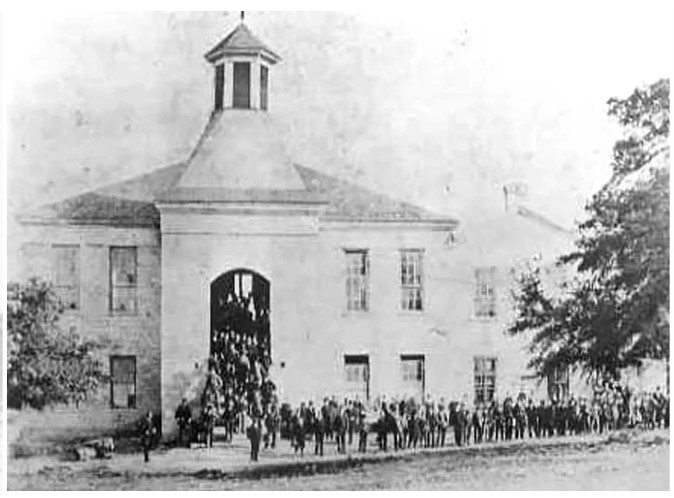
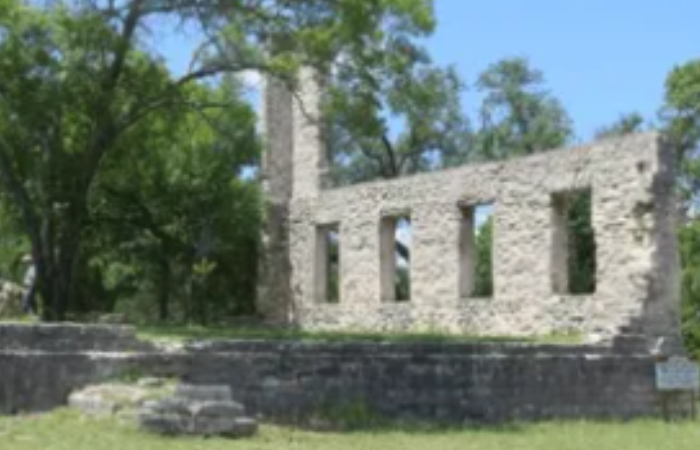
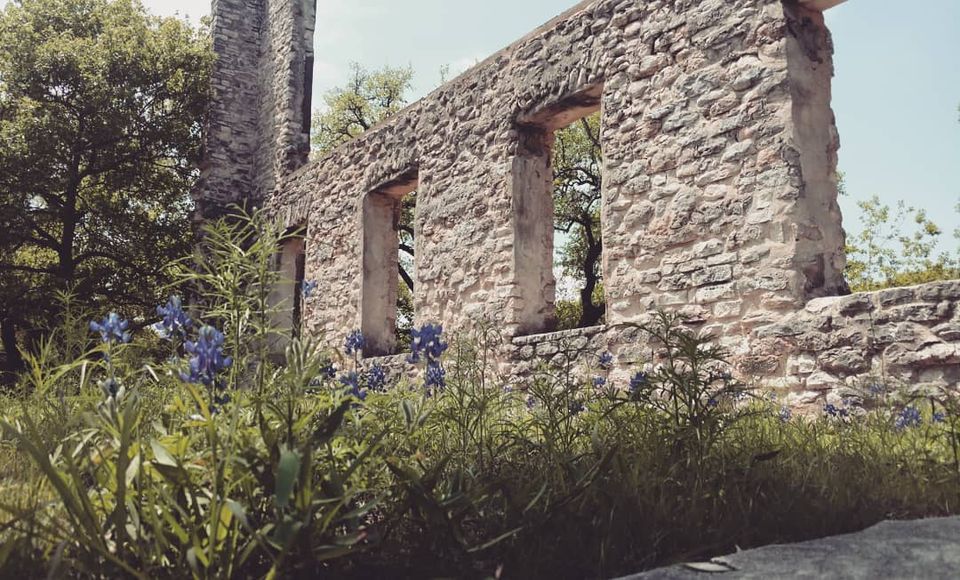

THIS IS A STOP ON THE SALADO HISTORIC LANDMARKS TOUR – PLEASE RESPECT THE PROPERTY OF ANY PRIVATE BUSINESS OR RESIDENTS AT THIS LANDMARK.
Salado Museum
The historic Salado Museum building holds the distinction of being among the earliest structures in Salado, having accommodated a diverse range of businesses over the years. In 1959, its role evolved when it became the Central Texas Area Museum, an institution founded by Lucile A Robertson. A significant milestone emerged circa 2012, marked by the merging of the Salado College Foundation and the Central Texas Area Museum, leading to the establishment of the Salado Museum and College Park.
Presently, the Salado Museum and College Park continues its pivotal mission of commemorating the legacy of Salado and the intrepid pioneers who forged this community. It stands as a guardian of the invaluable Salado College ruins and the rich history surrounding the institution. A notable annual event hosted by the Museum is the Scottish Gathering and Highland Games, held every November. Through these endeavors and more, the museum remains dedicated to the preservation and celebration of Salado’s past, ensuring that its history endures for generations to come.

THIS IS A STOP ON THE SALADO HISTORIC LANDMARKS TOUR – PLEASE RESPECT THE PROPERTY OF ANY PRIVATE BUSINESS OR RESIDENTS AT THIS LANDMARK.
The Shady Villa —
Stagecoach Inn
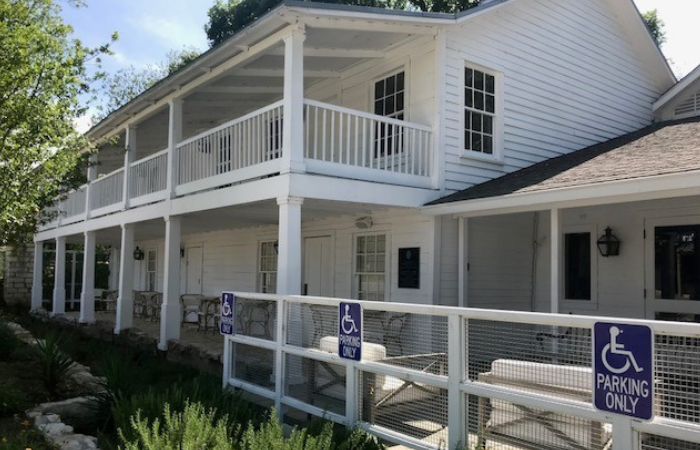
Salado’s Stagecoach Inn was one of the first lots sold in 1860. Thomas Jefferson Eubanks built the Salado House Hotel to serve travelers along the stagecoach route. This historic landmark hotel has gone through many changes over the years, including being known as Buckles Hotel and Shady Villa Hotel. In 1943, entrepreneur Dion Van Bibber and wife Ruth purchased the property, with the old-fashioned restaurant featuring waitresses reciting the daily menu. In 1960, it became a destination resort when the modern motel complex and club were added. The Shady Villa Hotel and Stagecoach Restaurant are still in operation, with updated room amenities, a new pool pavilion, and meeting space for weddings and events
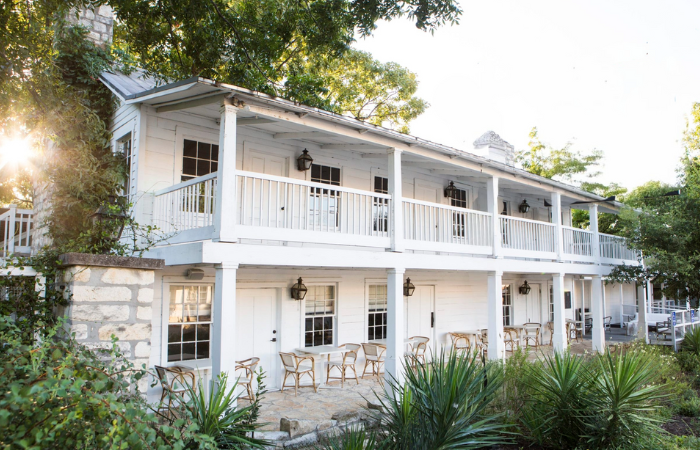

THIS IS A STOP ON THE SALADO HISTORIC LANDMARKS TOUR – PLEASE RESPECT THE PROPERTY OF ANY PRIVATE BUSINESS OR RESIDENTS AT THIS LANDMARK.
Stagecoach Inn Log Cabin
The Stagecoach Inn log cabin was built two miles west of this site on a ranch in the 1800s. In the 1930s, a family lived in it when working on the ranch. In 1934, it was given to the owners of the Stagecoach Inn who used it as a restaurant. At that time the cabin was on Highway 81, right in front of the cabin. Meals were 35 cents and consisted of “depression food” served family style. The menu was fried fish/chicken, black-eyed peas, and other homemade dishes. Through the years, it has been used as a variety of shops. When the Dion Van Bibber owned the Inn, it was his office. In the 1980s, the cabin was a gift shop. The current owners do not have plans for its use. (SHSL)

THIS IS A STOP ON THE SALADO HISTORIC LANDMARKS TOUR – PLEASE RESPECT THE PROPERTY OF ANY PRIVATE BUSINESS OR RESIDENTS AT THIS LANDMARK.
Barbee-Berry Mercantile Building
Salado Old First State Bank
The site of the old Salado First State Bank was built from rock taken from the Vickrey-Berry home on Main Street. After the bank closed the building sat abandoned. In 1962, former New York model, Grace Rosanky Jones, purchased the old bank building and began renovation for what later became a celebrated upscale dress shop named Grace Jones. It offered the finest in fashion from New York, Paris, and Milan, attracting customers from throughout the United States. It is currently home to a retail shop. (SHSL)

THIS IS A STOP ON THE SALADO HISTORIC LANDMARKS TOUR – PLEASE RESPECT THE PROPERTY OF ANY PRIVATE BUSINESS OR RESIDENTS AT THIS LANDMARK.
Salado Springs
Gushing limestone springs, abundant fish, flowers, and trees have made the banks of Salado Creek a good home site. Indians camped beside a stream; Spanish explorers names it. The first Anglo-American settler was Archibald Willingham in 1851 built a log cabin. The College and town of Salado were built on a creek in 1860. The creek once had 8 mills, thus was the county industrial center. Chisholm Cattle Trail crossed it, as did Dallas-San Antonio stage line. The 35-mile creek is one of many which rise at the Balcones Fault – an outstanding North American region of springs. (RTHL)

THIS IS A STOP ON THE SALADO HISTORIC LANDMARKS TOUR – PLEASE RESPECT THE PROPERTY OF ANY PRIVATE BUSINESS OR RESIDENTS AT THIS LANDMARK.
Guest Sanford Grain Storage
The Guest and Sanford grain storage property was purchased for $200 in 1957. Earl Guest and Paul Sanford built a grain storage building on the property in 1958 to store government grain purchased from local farmers. The grain storage building was built with a tin exterior and wooden planks on the inside walls. It had an aeration system to stabilize moisture and heat. The interior lumber is all original. The building’s capacity was 2,250,000 lbs. of grain. The building was renovated for use as a theater (Silver Spur). And, again renovated for the Barrow Brewing Company, serving excellent craft beer. (SHSL)

THIS IS A STOP ON THE SALADO HISTORIC LANDMARKS TOUR – PLEASE RESPECT THE PROPERTY OF ANY PRIVATE BUSINESS OR RESIDENTS AT THIS LANDMARK.
Baines House
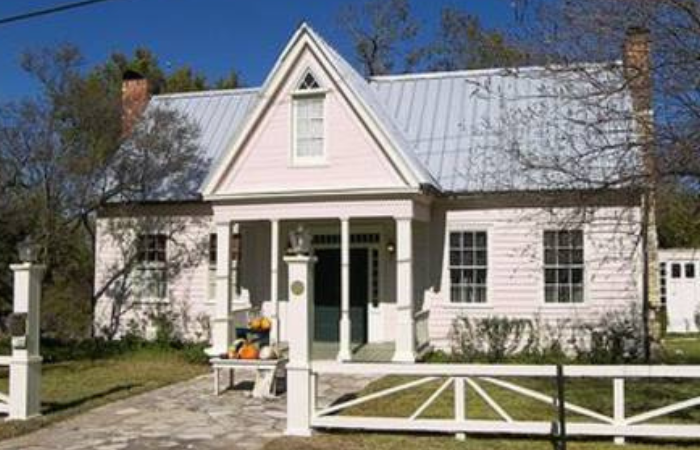
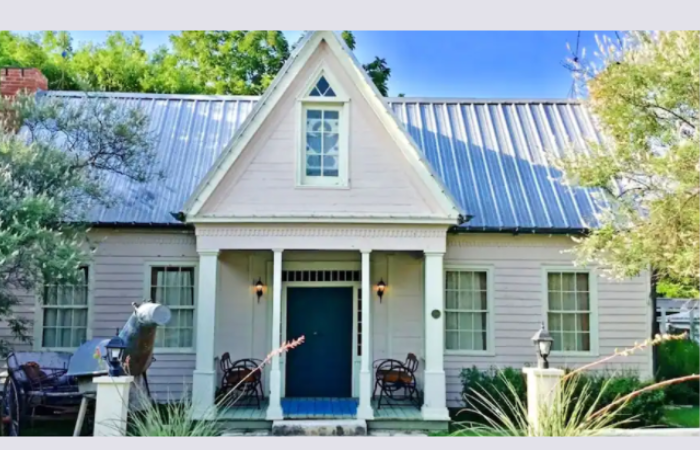
The George Washington Baines House was built in 1867 when he came to Salado to be the Baptist pastor. Reverend Baines, his second wife Cynthia, daughter Annie Melisa and son, Taliaferro lived in the home. The house represents an original construction in the Greek Revival mode, with some characteristics of Victorian architecture due to 19th-century modifications. The property has been restored to its middle 19th-century condition. Reverend Baines died in 1882 and is buried in the Salado Cemetery. (RTHL, NRHP)

THIS IS A STOP ON THE SALADO HISTORIC LANDMARKS TOUR – PLEASE RESPECT THE PROPERTY OF ANY PRIVATE BUSINESS OR RESIDENTS AT THIS LANDMARK.
Old Salado Cemetery & Historic Graveyard
This graveyard, a 2.5-acre site given by E. S. C. Robertson, is the final resting place for many prominent Salado residents. Many of the gravesites have Texas Historical Commission Markers. The earliest marked burial site is 1856. Oral tradition indicates there were others buried there prior to then, but those earlier burials are not marked or documented. Stones throughout this section of the graveyard mark old burial sites since carved markers were not readily available. Marble was used as a common marker in later years since it was easy to carve and was imported from other states. (RTHL)

THIS IS A STOP ON THE SALADO HISTORIC LANDMARKS TOUR – PLEASE RESPECT THE PROPERTY OF ANY PRIVATE BUSINESS OR RESIDENTS AT THIS LANDMARK.
Texas Cattle Dipping Vat
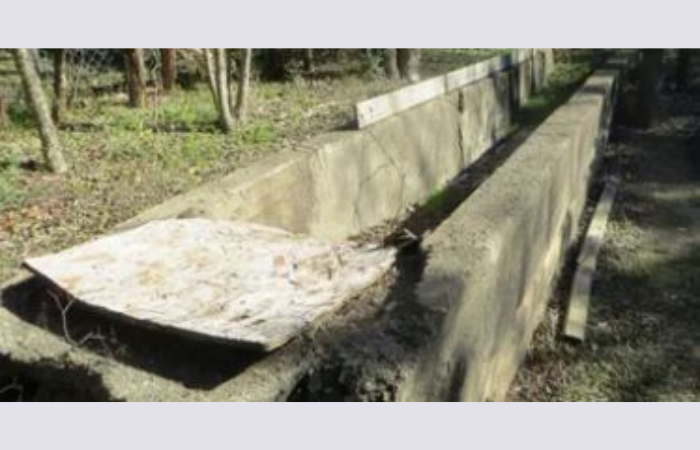
Salado has one of the last Cattle Dipping Vats in Texas. The need for dipping vats arose from cattle dying from protozoa (ticks) carried on the backs of longhorns that swam the Rio Grande from Mexico. In 1888, the cause of “Texas Fever” was discovered. In 1889, a solution to dip cattle in a lime/sulfur mixture was discovered. In 1892, the U.S. Dept. of Agriculture stopped the shipment of cattle from Texas. This devastated the cattle industry. To combat the ticks, vats were built that were 30 ft. long, 2.5 ft. wide and 7 ft. deep. Beaumont Crude was put in the vats until a refined mixture of arsenic. soda and pine tar was developed and used until 1980. Many vats were destroyed by people opposed to dipping cattle. (SHSL)

THIS IS A STOP ON THE SALADO HISTORIC LANDMARKS TOUR – PLEASE RESPECT THE PROPERTY OF ANY PRIVATE BUSINESS OR RESIDENTS AT THIS LANDMARK.
Rose House
The Maj. A. J. Rose House was built in 1870. The home is made of wood-frame with an ell-shaped plan in the Greek Revival style. Maj. Rose built this house for his wife Sarah and their eleven children. The house was built on a large amount of land at the east end of Salado. It remained in the Rose family well into the 1960s. He died in 1903 and his wife in 1900. (RTHL, NRHP)
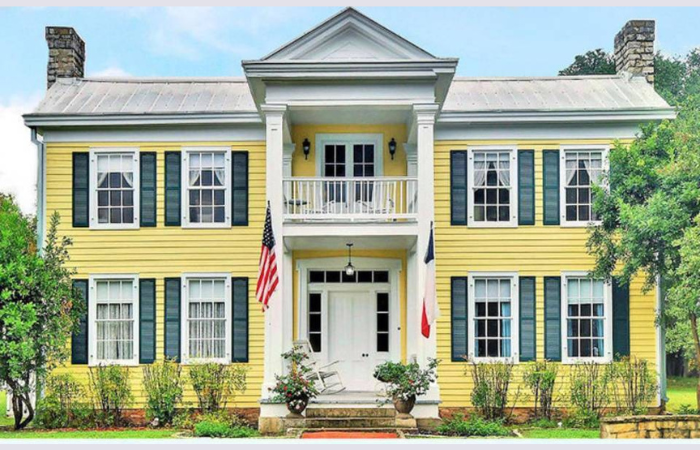
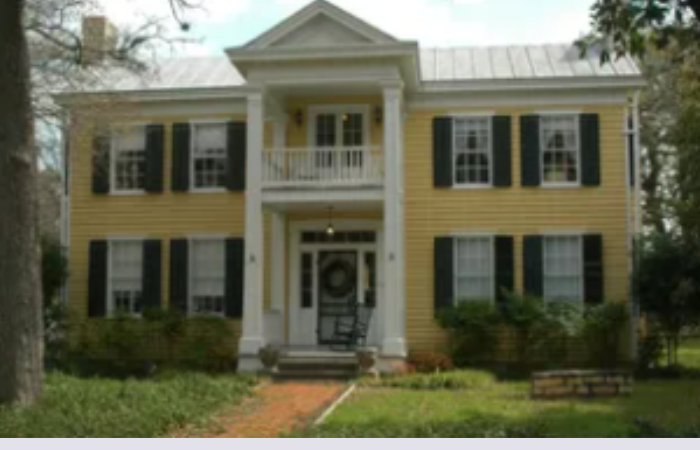

Photo by Salado UMC
Salado Methodist Church Chapel
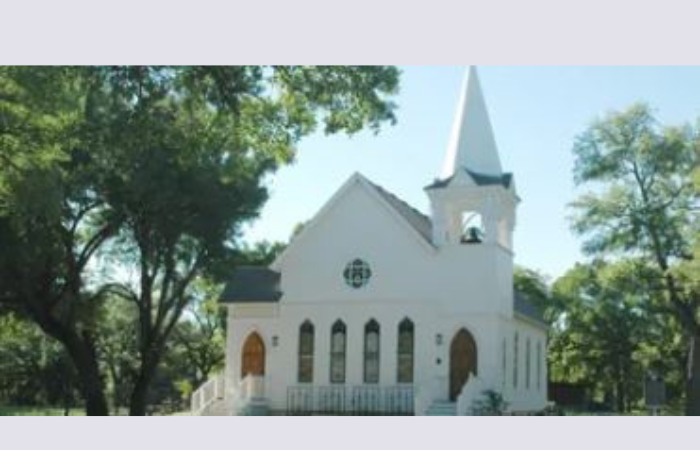
The Salado United Methodist Church was built in 1890 and portrays the popular carpenter Gothic Revival style of that time. The congregation was originally formed in 1854 by a circuit rider at Pecan Grove but didn’t have a building before this one. The stained glass windows have been added throughout the years. The building was moved to an new location on Royal Street in 2005 to make room for a new sanctuary and offices/classrooms. Because of its historic significance, the building was kept in its original form and restored. Today it is used for special occasions. The original site of the church was on Thomas Arnold Rd. ( RTHL)
Today, the chapel is available for weddings. Information from their website states:
We are happy to offer two locations, both sacred and romantic choices, for the bride’s forthcoming wedding. The Historical Little Chapel in a “wildwood” setting is a dream-come-true for the smaller
wedding, seating a maximum of 100 persons. A white frame, gothic design with steeple and bell, the church was built in 1890 and restored in 1996, to its original glory. It was relocated to the site of the new SUMC campus on Royal Street in 2006 and has been completely refurbished, again to the 1890 specifications. The soft beige tones of beaded board paneling and original pine floors, prayer rail and pulpit, accented by 18 stained glass windows, give the inside of the chapel an atmosphere of simple elegance, with or without traditional wedding decorations.
The all-purpose building is on a quiet, wooded site just east of downtown Salado, and is another lovely choice for larger weddings. The setting is beautifully landscaped, with a flowing fountain and stone accents. Entrance to the building is thru an octagonal atrium with magnificent floor to ceiling leaded, etched glass windows on three sides. Above, the cupola ceiling soars to a height of 20 feet, and has 8 additional leaded glass windows, each featuring a dove in flight. It is furnished with traditional furniture and oriental style rugs on a hardwood floor. The seating capacity is approximately 250 in the carpeted sanctuary area. Adjoining rooms can accommodate 40 additional seating spaces if needed.
If you are searching for a special place for your wedding, and would like more information or an appointment to see the beautiful, historical chapel or the larger facility, please contact our wedding coordinator, LuAnn Magoulick, at [email protected] or call the Salado United Methodist Church office at (254) 947-5482.

THIS IS A STOP ON THE SALADO HISTORIC LANDMARKS TOUR – PLEASE RESPECT THE PROPERTY OF ANY PRIVATE BUSINESS OR RESIDENTS AT THIS LANDMARK.
Hendrickson-Caskey House
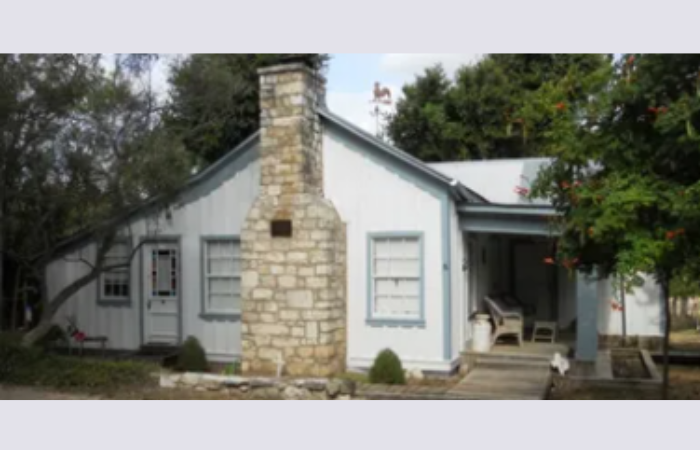
Built in 1871, the house is named for its two most prominent occupants: John Hendrickson and William J. Caskey. John Hendrickson was a stone mason active in building the first Texas State Capitol in 1853, Salado College, Barton House, Twelve Oaks, and Salado’s cable suspension foot bridge.
In 1882 William Caskey and wife moved to Salado for their children’s education at Salado College. William was active in establishing Thomas Arnold High School, a member of the Salado Grange #1, and a Mason. First Baptist Church used this building as their parsonage. until 1924. It was completely restored. (NRHP)

THIS IS A STOP ON THE SALADO HISTORIC LANDMARKS TOUR – PLEASE RESPECT THE PROPERTY OF ANY PRIVATE BUSINESS OR RESIDENTS AT THIS LANDMARK.
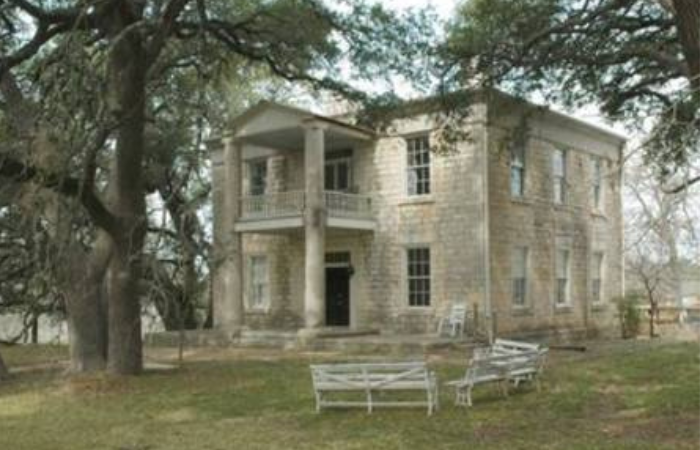
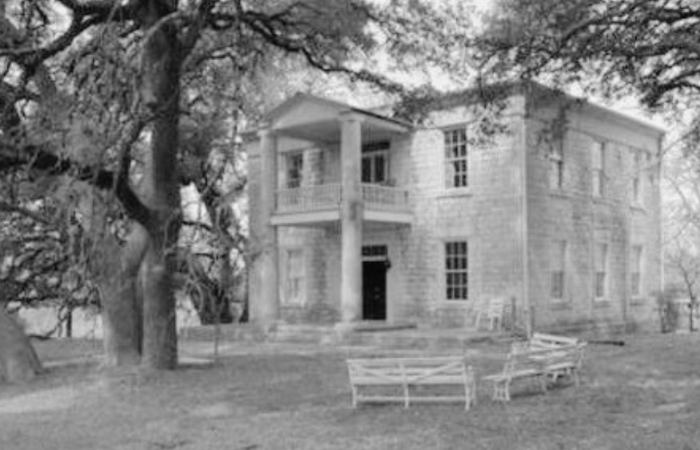
McKie House - Twelve Oaks

THIS IS A STOP ON THE SALADO HISTORIC LANDMARKS TOUR – PLEASE RESPECT THE PROPERTY OF ANY PRIVATE BUSINESS OR RESIDENTS AT THIS LANDMARK.
Alexander's Medicinal Distillery
On this site in 1861-65, the William R. Alexander Distillery met a wartime need in Texas when Governor Lubbock closed all Texas distilleries to save grain. Army calls for medicinal liquor (for opiate and stimulant purposes) soon caused him to order a few, including Alexander’s, re-opened. In drastic medical shortages, Texans throughout the Civil War provided help as they could. Bandages, sewing silk, lint, pokeweed, peach bark, barilla, and other home medical aids went to various military units. (RTHL)
Free Visitors Guide